

Let’s work together to build responsible innovation
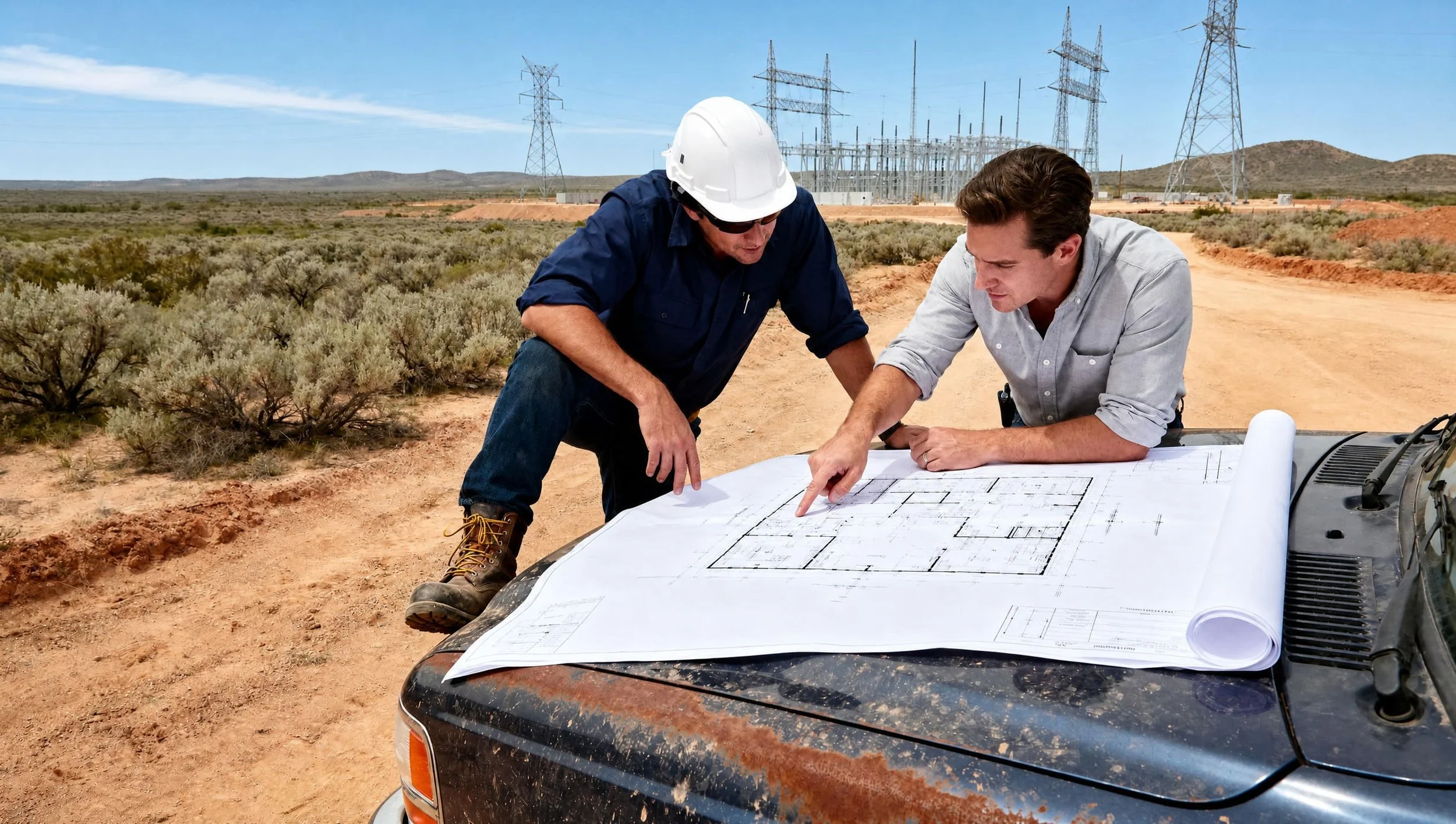
The development of modern data centers requires more than cutting-edge technology: It demands true partnership with our communities. We balance our technical expertise with local accountability to ensure sustainable and efficient operations.
Our community hub
Explore our Community Hub for more information about Emergent and our process; we regularly update this page for your convenience.
We strive to have community benefit agreements with every Emergent project.
We strive to have community benefit agreements with every Emergent project. These are binding commitments, negotiated with local stakeholders, that put specific obligations on paper: workforce targets, infrastructure investments, environmental standards, and direct contributions to the communities that host our campuses. We don’t ask communities to trust a handshake. We put it in writing. We work with local officials, residents, and community organizations to identify what matters most to the people who live there. The resulting agreement is a binding document with specific, measurable commitments that we report on publicly throughout the life of the project.

A community benefit agreement executed for projects

Binding commitments on local hiring, procurement, and infrastructure contributions

Environmental and operational standards written into the agreement
Regular public reporting on compliance with agreement terms
Community Resources & Latest Insights
Stay informed on modern data center research, announcements, news, and events. Explore the following articles for important insights.
Meet the Team
-
![]()
An Analysis of Costs and Revenues of Data Centers
A whitepaper by energy consultancy E3 analyzes how high data center utilization (80–90%) spreads fixed system costs and can mitigate upward pressure on consumer electricity rates when paired with modern tariff designs.
-
![]()
Data Centers Explained - Industry Insights by Joel Kaplan
A personal account on a visit to one of Meta’s data center campuses. Discover how data centers can transform communities and lead to positive community impact and future growth.
-
![]()
2026 Economic Impact Study
This 2026 study by PwC and Data Center Coalition highlights how the data center industry helps drive economic growth, job creation, and neighborhood partnership. See the study for more insights.
-
![]()
I&M Indiana Utility Announces Utility Rate Decrease
This official news release outlines I&M’s approved utility rate decrease for their consumers. The announcement shows how regional power sales and data center growth helped lower residential billing costs.
-
![]()
Study: New Evidence on Data Center Employment Effects
This research analysis by the Brookings Institution examines the wage and job creation trends in U.S. counties that have data centers. It highlights how long-term local tech growth depends on building multi-facility clusters rather than individual sites.
-
![]()
How Data Centers May Help Lower Avg. Electricity Rates
This brief from the Data Center Coalition shares a new study that highlights how U.S. data center growth from 2015 to 2024 have allowed electricity rates to “fall modestly” during that period. The study is linked via PDF in the featured post.
-
![]()
Study: Homes Closer to Data Centers Have Higher Value
A George Mason University study conducted by the Center for Regional Analysis reveals that residential property values in Northern Virginia are higher for homes located closer to data centers. Read the research brief for more information.
-
![]()
Data Center Water Consumption
Did you know data centers rank 20th in the world’s top water consumers? Read more on how data centers use water with innovative solutions.
-
![]()
The Potential Local Economic Benefits of Data Centers
Here is a perspective on how data centers can boost job creation, increase tax revenue, and support local business growth. This post highlights the positive community impacts of data center development.
-
![]()
Do Data Centers Contribute to Rising Utility Costs?
This independent E3 analysis report reveals how other factors, such as inflation and grid modernization, are increasing electricity rates compared to data centers. Read the full report for more details.

If you’re interested in learning more about Emergent and our process, visit our Responsible Development Page. Connect with us if you have any questions - we’re always here to answer.
Section to showcase community engagements
Short article heading goes here
Lorem ipsum dolor sit amet, consectetur adipiscing elit. Sed vel augue ac mauris fermentum placerat. Integer consequat
Short article heading goes here
Lorem ipsum dolor sit amet, consectetur adipiscing elit. Sed vel augue ac mauris fermentum placerat. Integer consequat
Short article heading goes here
Lorem ipsum dolor sit amet, consectetur adipiscing elit. Sed vel augue ac mauris fermentum placerat. Integer consequat
We work together with our communities to bring lasting value.
We work with local officials, residents, and community organizations to identify what matters most to the people who live there. The resulting agreement is a binding document with specific, measurable commitments that we report on publicly throughout the life of the project.
Name of the document
Download
Name of the document
Download
Name of the document
Download

You’ve got questions? Good. We’ll answer.
Data centers are critical infrastructure. They need to be built. And the communities where they’re built deserve real answers about how. Here are the ones we hear most.
-
Hyperscale data center is a purpose-built campus designed for massive computing workloads from cloud providers and AI platforms. These facilities have dedicated power infrastructure, advanced cooling, and redundancy at every layer. They're built to operate 24/7/365 with extremely high reliability, because the services they support (cloud computing, AI training, streaming, financial transactions, etc.) can't afford downtime.
-
Our campuses use closed-loop cooling systems. The water recirculates continuously within sealed loops rather than being consumed and discharged. This is the most water-efficient approach available for data center cooling. For comparison, conventional data centers using evaporative cooling can consume millions of gallons of water per day. Closed-loop systems use a fraction of that. A typical golf course, hospital, or manufacturing plant uses significantly more water daily than our facilities. We're happy to share project-specific water data for any of our campuses.
-
There are many factors that raise electric rates. Aging grid infrastructure needs replacement. Fuel costs fluctuate. Regulatory compliance, extreme weather events, and the cost of transitioning to cleaner energy sources all put upward pressure on what ratepayers pay. New large-scale demand is a fair concern on top of all of that. Here's why an Emergent campus isn't one of those factors. We build our own substation and transmission infrastructure. We're not plugging into an already-strained grid and asking local ratepayers to absorb the cost. We fund, design, and construct the backbone power infrastructure ourselves, we pay for any upgrades required by the grid operator, and we pay for the energy we use. The local grid gets strengthened, not burdened.
-
For example, a 1 GW campus generates substantial property tax revenue that directly benefits local schools, municipal services, and infrastructure budgets. At full buildout, it supports several hundred permanent, high-paying positions in operations, maintenance, security, IT, and facilities management. The tenant will have its own staff on-site too. And the indirect activity (vendors, contractors, service providers, hospitality, retail) grows alongside it.
-
Data centers produce some operational noise, primarily from cooling systems and backup generators during testing. We design our campuses to meet or exceed local noise ordinances at the property line. That starts with site selection: our campuses sit on industrial-zoned land, typically with significant setbacks from residential areas. Mechanical equipment is oriented and enclosed to direct sound away from neighbors. We also monitor noise levels during operations. If a community has concerns, we want to hear about them so we can address them directly.
-
Data centers use backup generators for emergency power. Those generators aren't unmonitored smokestacks. Modern standby systems run a full emissions-control chain: diesel particulate filters that physically trap soot before it reaches the air, selective catalytic reduction that converts NOx into nitrogen and water, and diesel oxidation catalysts that break down carbon monoxide and unburned hydrocarbons. In the U.S., stationary emergency generators are held to EPA Tier 4 Final standards, which are among the strictest diesel emissions regulations that exist. Our systems continuously monitor filter backpressure, exhaust temperature, and runtime, and they log that data every cycle. This isn't something we check at install and walk away from. The controls run automatically, the data is recorded, and the equipment is built to prove it's working. We're not going to pretend the broader conversation about generator use near communities doesn't matter. It does. But the idea that these systems operate without controls or oversight doesn't match the engineering that's actually deployed on site.
-
We show up early and stay. That means engaging with local government, residents, and stakeholders before we break ground. We answer questions publicly, address concerns directly, and commit to being a long-term neighbor. A campus only works if the town around it works too. Our job is to show up first, listen, and stay accountable through entitlement, construction, and the decades the facility operates.